One platform across the lifecycle
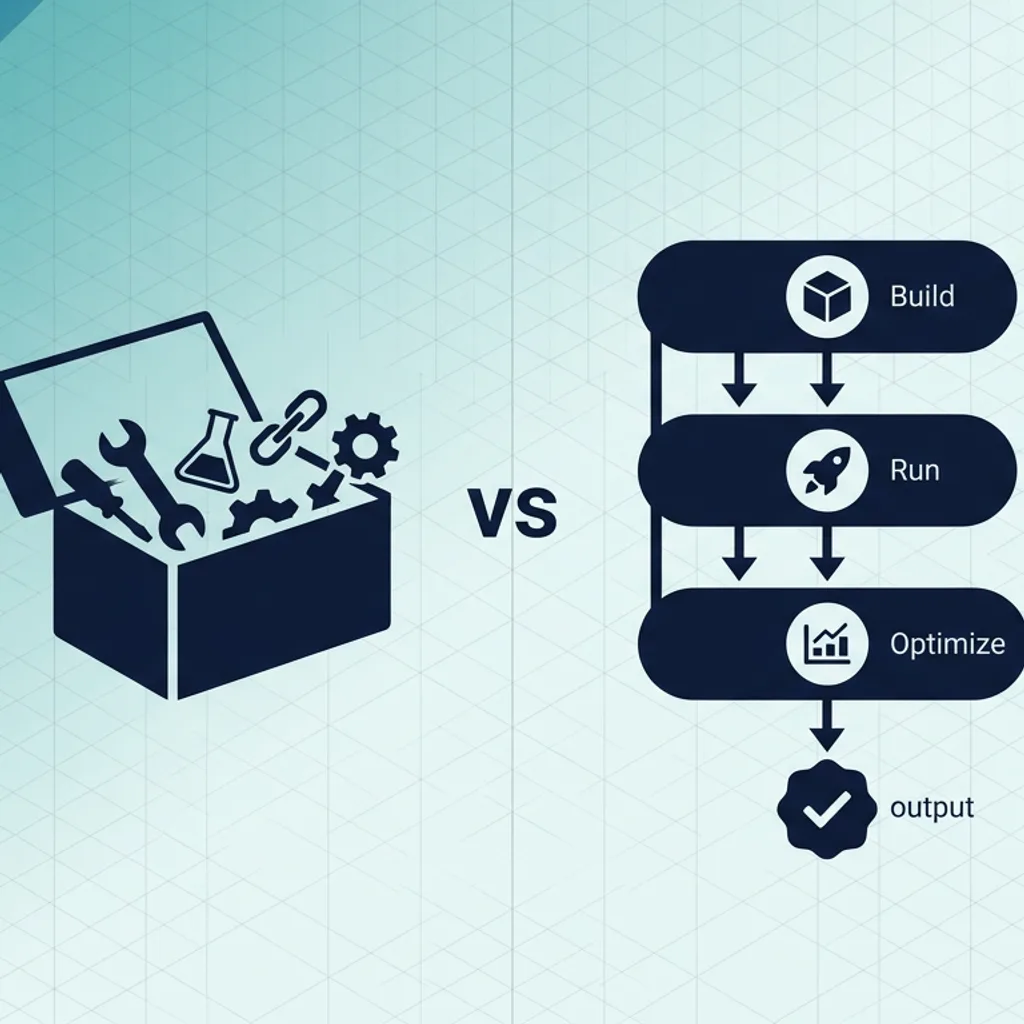
Syllable AI is built around a single build, run, and optimize model. Organizations do not have to present separate surfaces for engineering, operations, and channel delivery.

LangChain gives engineering teams a powerful ecosystem for building, observing, evaluating, and deploying agents. Syllable AI gives organizations a trusted neutral platform to build, run, and optimize AI agents across teams, providers, and channels.
LangChain is one of the most widely adopted agent engineering ecosystems. The broader stack now includes LangChain for faster agent development, LangGraph for lower-level orchestration, LangSmith for observability, evaluation, and deployment, and Agent Builder for no-code agent creation. For engineering-led teams that want open-source flexibility and fine-grained control, it is a credible and mature option.
Syllable AI gives organizations one surface to build, run, and optimize AI agents with code and no-code workflows, provider-neutral gateways, production-grade operations, and support for voice, SMS, chat, and web. It is a better fit when the goal is not only to engineer agents, but to operate them across real workflows with domain experts, engineering teams, and operations teams working together.
| Capability | Syllable | LangChain / LangSmith |
|---|---|---|
| Best fit | Organizations that need one platform across build, run, and optimize | Engineering teams that want maximum framework flexibility |
| Build surface | Code + no-code with Meta Agent | Code-first frameworks + no-code Agent Builder |
| Operational model | Unified platform for runtime, governance, and optimization | Modular stack for development, evaluation, and deployment |
| Channels | Voice, SMS, chat, web | Framework-agnostic - channel support depends on what teams add |
| Provider model | Neutral gateways across LLM, STT, and TTS providers | Neutral model and tool integrations at the framework layer |
| Visibility and improvement | Distributed tracing, dashboards, conversation analytics, A/B testing, human review | Strong tracing, monitoring, offline and online evals, annotation, deployment insights |
| Deployment options | Multi-cloud deployment with production-grade controls | SaaS, hybrid, or self-hosted deployment options through LangSmith |
| Team model | Shared surface for domain experts, engineering teams, and operations teams | Strong fit for engineering-led agent development workflows |
Syllable AI is built around a single build, run, and optimize model. Organizations do not have to present separate surfaces for engineering, operations, and channel delivery.
The Meta Agent gives domain experts a guided way to contribute while engineering teams keep programmatic control. LangChain also supports no-code through Agent Builder, but its center of gravity remains agent engineering.
Syllable AI emphasizes runtime control across providers, clouds, and channels. LangChain emphasizes openness at the framework and tooling layer.
Syllable AI includes channel strategy as part of the platform story. LangChain is intentionally framework-agnostic and can support those experiences when teams compose the surrounding stack.
Choose Syllable AI when the priority is a trusted neutral platform where domain experts, engineering teams, and operations teams can build, run, and optimize AI agents together. It is especially strong when voice, SMS, chat, and web all matter, and when provider neutrality, operational visibility, and production-grade control need to live on one platform.
Choose LangChain when the priority is open-source flexibility, lower-level control, and an engineering-led workflow for composing custom agents and evaluation pipelines. For many teams, the decision is not either-or - LangChain can remain part of the agent engineering stack while Syllable AI provides the operational platform around it.