
What 100+ conversations at SaaStr AI Annual 2026 revealed about AI's real state
Three days at the Syllable AI booth, talking with founders, operators, and AI buyers about what they are building, buying, and worrying about.
Published: May 20, 2026
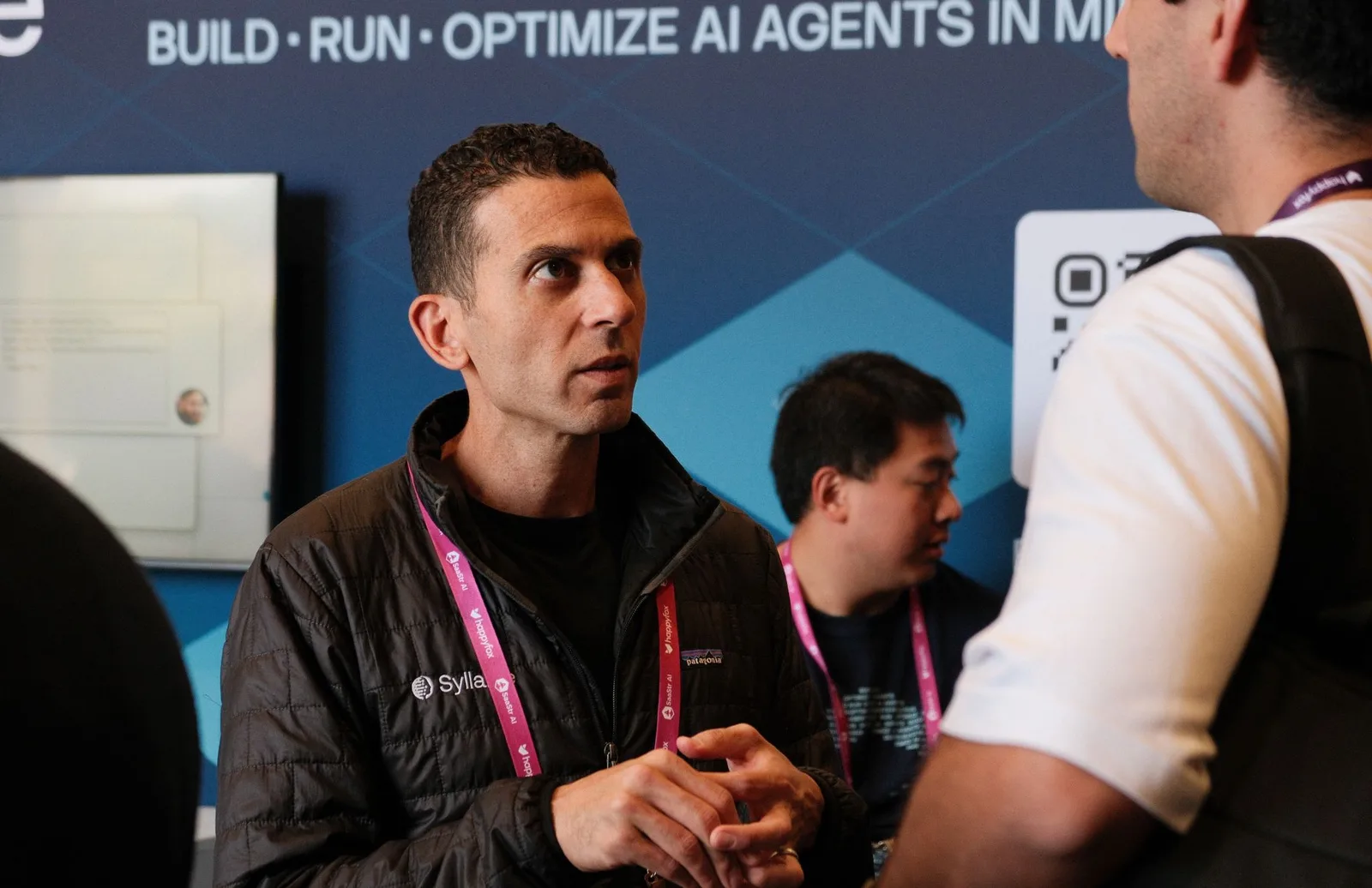
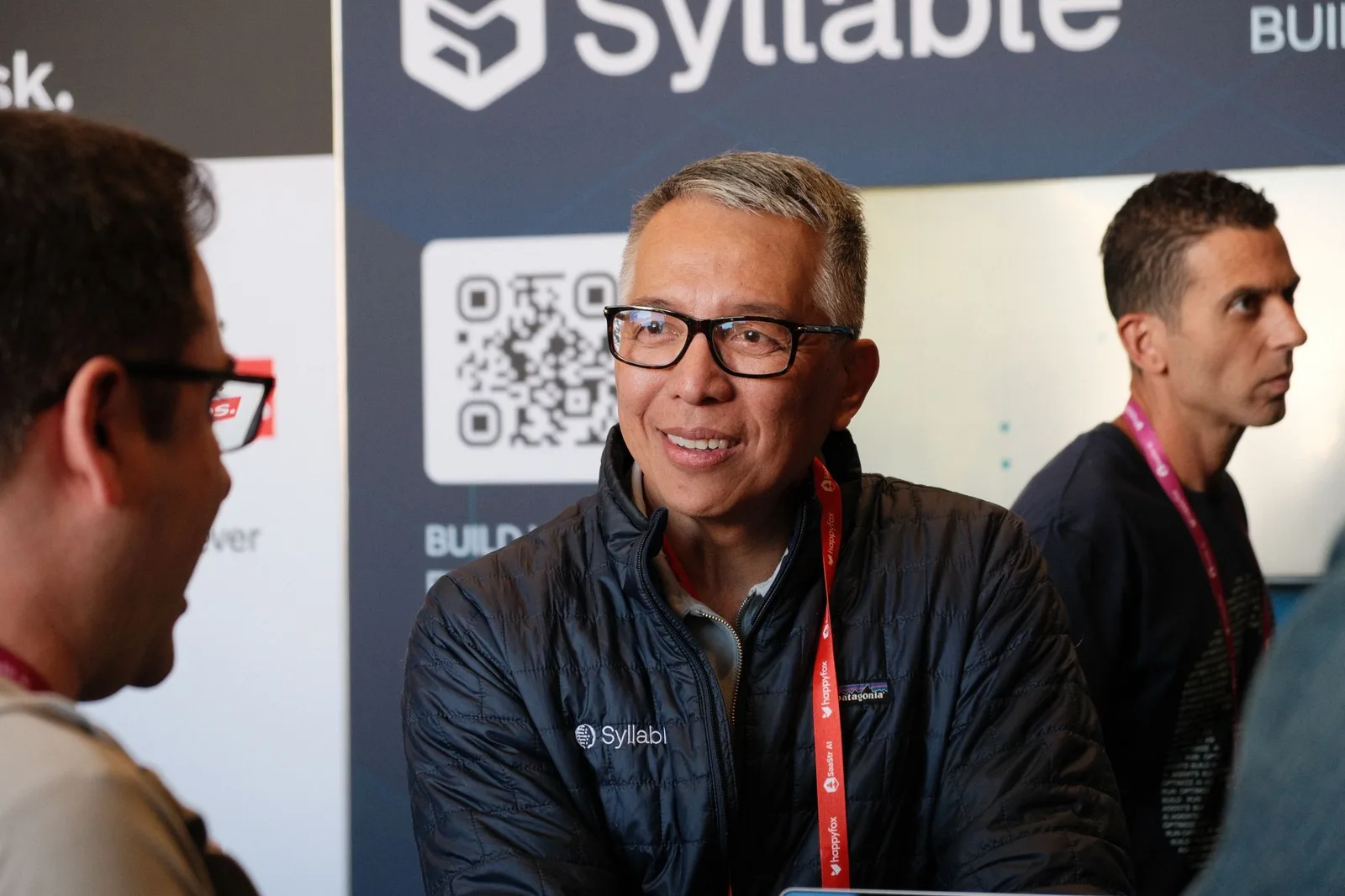
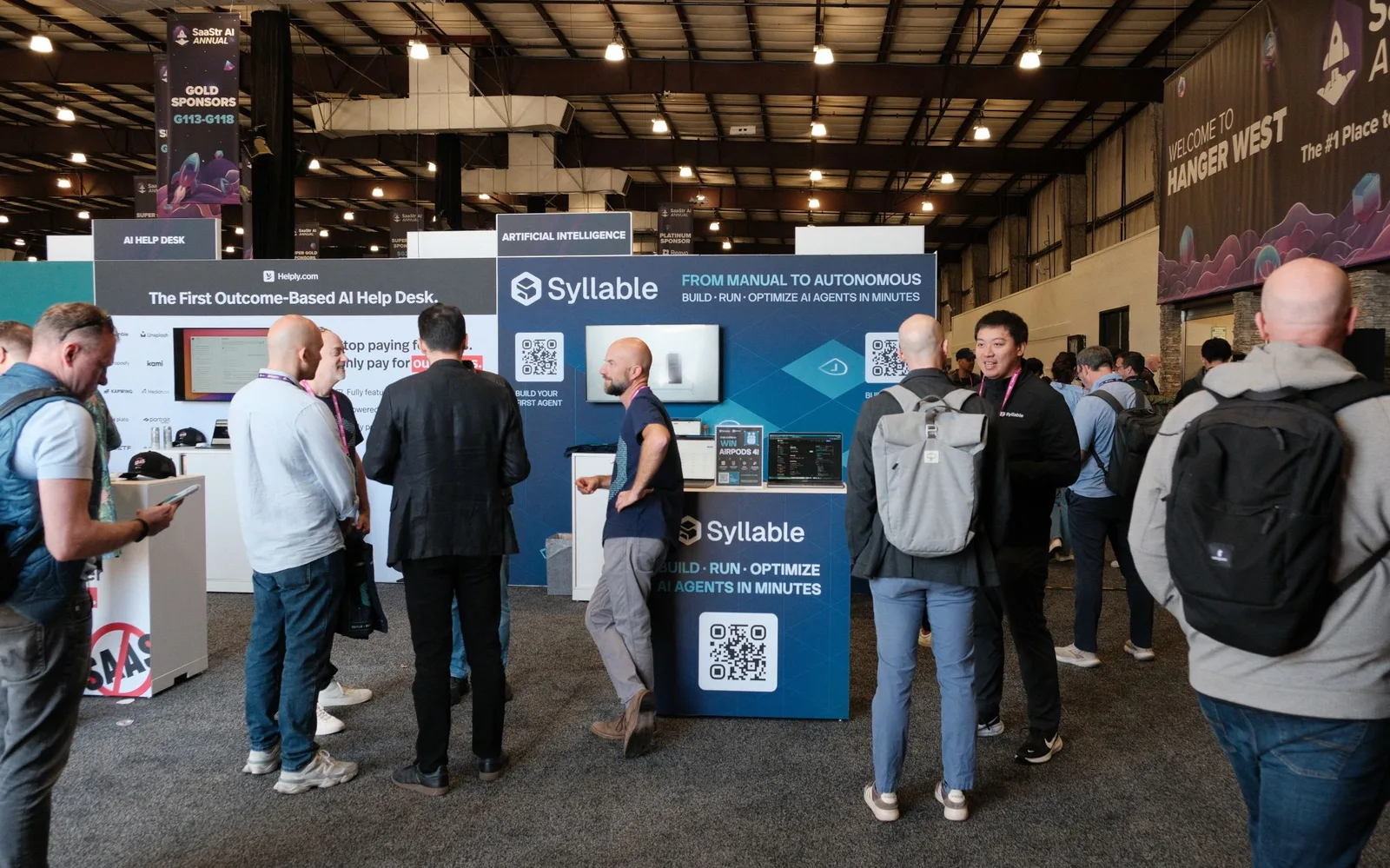
The Syllable AI team spent three days at SaaStr AI Annual 2026 in San Mateo, May 12-14. Booth G106. A wall-sized "Build, Run, Optimize" banner. Three demo laptops. A raffle for AirPods. And, by the end of day three, 100+ substantive conversations with founders, operators, and AI buyers from around the world.
This is what attendees themselves said they were thinking about, building, and trying to buy. No organization names. No quoted individuals. Just the aggregate signal from the floor.
The big thing attendees wanted to talk about: AI for teams
Nearly half of all booth conversations brought up the same idea: AI tools that work for a team, not just one person. Multiple people inside the same AI session. Shared context. Handoffs. Comments. Permissions. Workspaces.
A year ago, attendees at events like this were asking whether to use AI agents. This year, they were asking who else on the team needs to be in the loop. That shift changes which features matter, which roles get pulled into the buying conversation, and how fast a tool needs to prove itself.
What came up, and how often
Across the conversations:
- Team collaboration on AI work: nearly half (about 48%) of conversations
- Voice agents (inbound, outbound, or SMS): about 1 in 5 (21%)
- Already using Claude Code or Claude desktop: about 1 in 8 (12%)
- Security, compliance, governance, or sovereign data: about 1 in 12 (8%)
Voice agents almost always came up paired with a specific use case: recruiting, customer support, fintech outreach, real estate. Attendees had a workflow in mind and were looking for the platform to run it on.
The Claude-power-user crowd was a real persona. Attendees had been using Claude for months, sometimes longer than a year. Their question was not "what is Claude" but "how do I bring the rest of my team into the work."
Who was actually at the booth
Two patterns in the people themselves.
Founders and CEOs ran the AI conversation. Nearly half (about 45%) of booth conversations were with founders, CEOs, presidents, or owners. Among the most engaged conversations, that share climbed past half. CTOs were the second-most-common executive role. These were not delegated visits. The people deciding what their organization buys for AI in 2026 were the ones at the booth.
Marketing managers showed up more than engineers. Among non-executive visitors, marketing leaders and marketing managers were the most common. That tracks with the team-collaboration theme: non-technical builders are increasingly the people trying to use AI tools at their organizations.
AI adoption: a real split
When attendees described how far along their organization is on AI, the answers fell into four groups:
- Significant adoption (over 50% coverage): about 4 in 10 of those who answered
- Medium adoption (under 25%): about 1 in 4
- In-market looking right now: about 1 in 5
- Minimal adoption (under 10%): the rest
The interesting gap is between "significant adoption" and "in-market looking."
The "significant adoption" group is past the entry use case. They are not asking whether AI helps. They are asking how to govern, scale, attribute, monitor, and bring more of their team into the work. Their pain is operational.
The "in-market looking" group has an executive mandate, a use case in mind, and a 60-to-90-day deadline. They are not browsing. They are choosing.
Both groups took up most of the booth time. Different tone, same end state: this has to work at scale, with my team, on my data.
Industries that came up
The vertical mix was wider than "AI for SaaS." The biggest clusters of conversations:
- AI infrastructure and horizontal SaaS
- Sales and marketing technology (including agencies trying to use AI in service of their clients)
- Financial services and fintech
- Retail, ecommerce, and consumer
- Regulated verticals together (healthcare, security and IAM, government, industrial, real estate and construction): about 1 in 6 conversations
The regulated-vertical conversations were different in tone and depth: longer, sharper, with stricter buying criteria.
A few themes within those:
- Healthcare and life sciences: PHI handling, HIPAA, expanding existing Claude use to customer-success and sales teams without leaving the compliance perimeter.
- Financial services: PII, governance, billing-agent and quote-to-revenue use cases, embedded agents for downstream customers.
- Government and defense services: FedRAMP, sovereign data, legacy modernization.
- K-12 and higher education: compliance plus the additional layer of student-data sensitivity.
International demand was bigger than expected
About 3 in 10 conversations were with attendees from outside the US, with concentrations in India, Singapore, Thailand, Canada, Australia, the UK, Brazil, Turkey, and Germany. AI buying is not a US-only conversation. International buyers were often more specific than US-based ones: region, sovereignty, and language requirements came up early instead of late.
The quiet theme: don't get locked in
A smaller but consistent set of conversations surfaced something interesting: buyer leverage.
About 1 in 10 of the qualified conversations brought up some version of "I don't want to be locked in." Sometimes that was about being able to switch between LLMs as new ones launch. Sometimes it was about running in a specific cloud or region for compliance reasons. Sometimes it was about not betting the whole stack on one provider.
The pattern: the closer an attendee is to production AI, the more they treat vendor leverage as a buying criterion. A more capable model launches every few weeks. Cloud contracts pin organizations to one hyperscaler for years. Compliance frameworks restrict where data can live. Attendees who had been through a migration before were asking sharper questions about the next one.
This was a quieter theme than team collaboration, but every conversation that brought it up ended in concrete buying questions.
What stood out
A few patterns worth flagging:
The bar has moved. A year ago, AI conversations were exploratory. This year, attendees came with use cases, deadlines, and criteria. Most of the people at the booth were trying to ship something, not learn about AI.
Team-AI tools are pulling ahead of single-user tools. Production AI work involves a domain expert, an engineer, a compliance reviewer, and a customer-facing operator. The attendees with the most concrete plans were asking about how all of those people could participate in the same workflow.
Compliance is a buying criterion. In conversations from regulated verticals, compliance came up first, not last.
The international AI conversation is bigger than the US-centric coverage suggests. Buyers in Asia, Europe, and Latin America were as concrete in their asks as buyers in the Bay Area.
A note on the team behind the booth
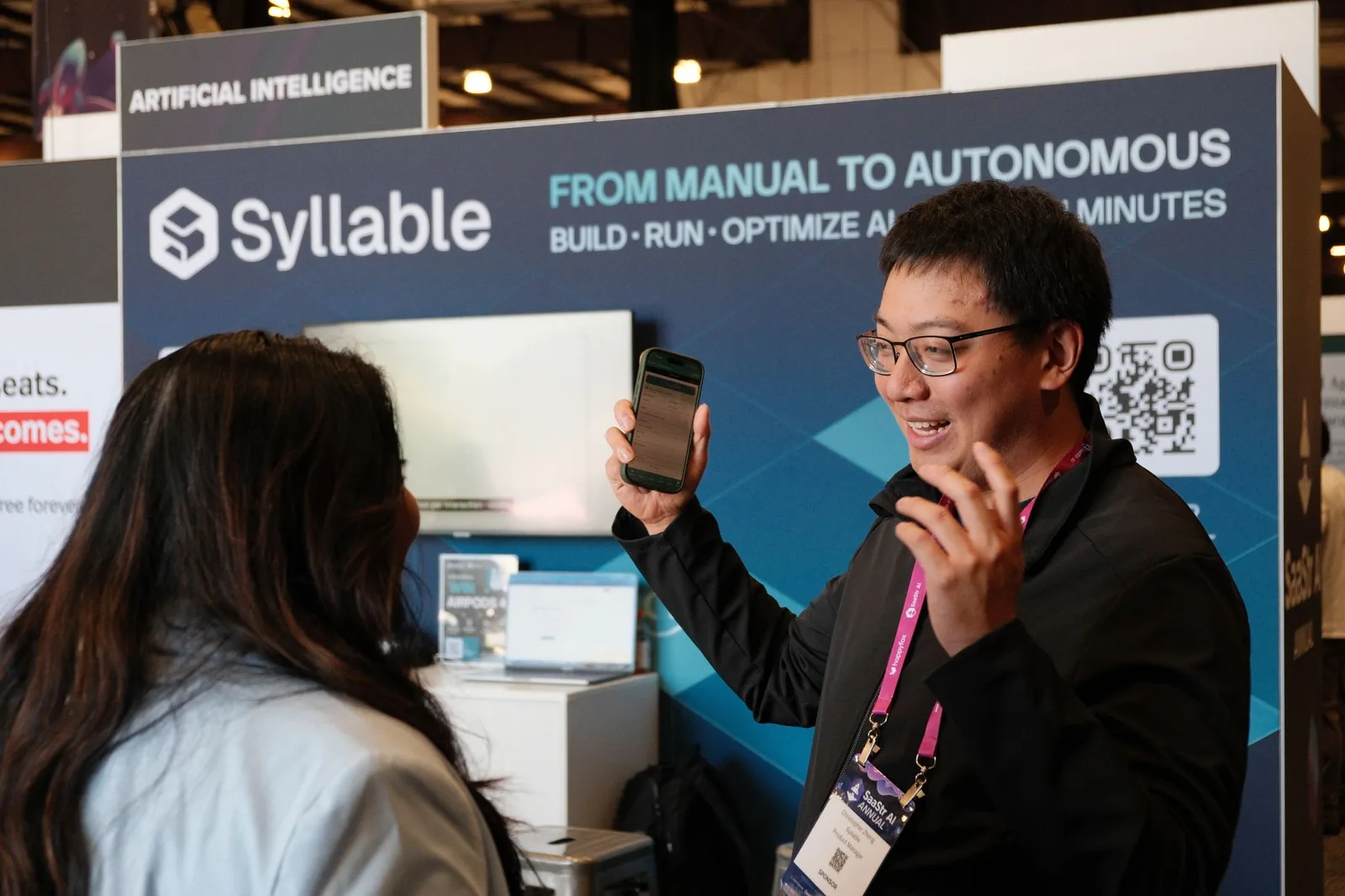
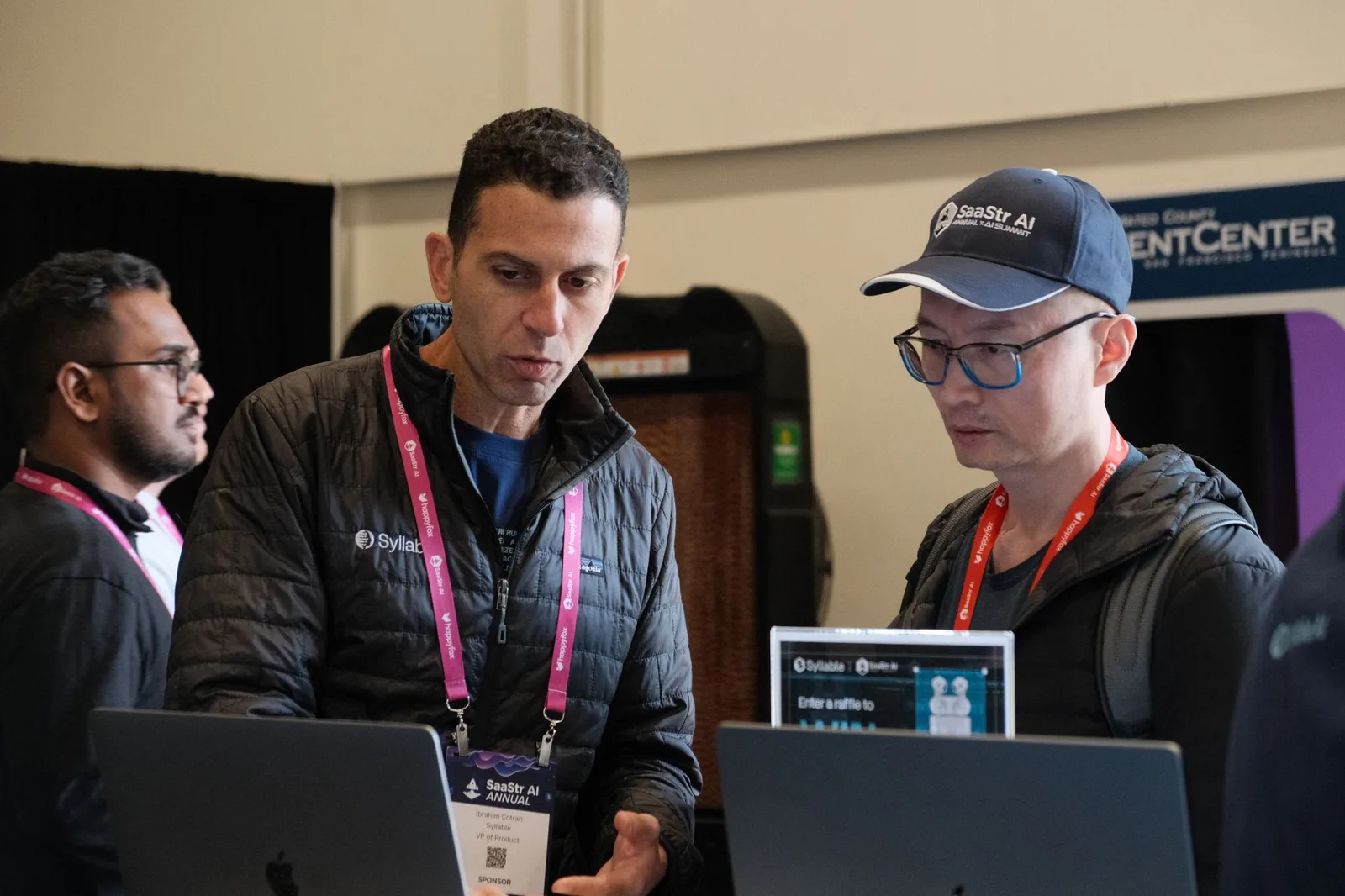
Three days, three demo laptops, six team members on rotation, hundreds of demos, and a steady line at the booth from open to close. Every conversation captured above was logged by a team member who then had to find the next attendee and start again. The recurring observation from the floor: people came back. Day one demo, day two with a colleague, day three with a deadline.
The richest conversations were the ones that started at "what does the platform do" and moved, within a few minutes, into "here is the workflow my team is trying to ship, and here is what is blocking us." Those conversations are the reason teams sponsor events like this. They are also the reason this post exists.
Where Syllable AI fits
The Syllable Agentic Platform is a trusted neutral platform to build, run, and optimize AI agents across the full lifecycle. AI for everyone, with mission-critical reliability.
The platform is provider and model agnostic, runs across major clouds (AWS, GCP, Azure, OCI), and is built on production-grade compliance (SOC 2 Type II, HITRUST e1, HIPAA, GDPR), declarative configuration, durable workflows, and a cellular architecture designed for multi-team collaboration on agent work.
If any of the patterns above describe an AI initiative inside your organization, the team would welcome a conversation. Contact Us or Start Free Trial.
Findings in this article are aggregated from 100+ substantive booth conversations at the Syllable AI booth during SaaStr AI Annual 2026. Aggregate only; no individual conversations are named or attributed. Percentages and proportions are rounded.
View All Blog Posts
Read more tutorials, product updates, and insights on the Syllable Blog.